

Building a new home is a big investment. Before choosing an electrical contractor, learn how competitive bidding works, what may be missing from a low bid, and how to avoid unexpected costs along the way.
Have you ever received a bid from an electrical contractor for a new home and thought, “Wow, that’s a great price!”—only to discover later that your home doesn’t have nearly enough outlets or lighting?
Maybe the inspector identifies code issues that need to be corrected before the project can be approved. Or perhaps you make a few changes during construction, only to receive an unexpected bill at the end of the job for work you didn’t realize would cost extra.
If any of this sounds familiar, you’re not alone. These are common frustrations homeowners can experience when comparing electrical bids.
I’m Charlie, owner of Kingdom Electric LLC in Sterling, Alaska. Over the past 15 years, I’ve had the privilege of working on a wide variety of electrical projects and helping customers bring their ideas to life. I started my own electrical contracting business more than three years ago, and I understand how frustrating it can be to compare bids, make decisions, and try to stay within budget.
My goal with this article is simple: to help you understand how electrical bidding works, what to look for when comparing contractors, and how to set yourself up for a smoother building experience.
How Does Competitive Bidding Work?
Competitive bidding is when several contractors price the same project using the same set of plans. In theory, the process is straightforward: everyone bids the job, and you choose the price and contractor that best fit your needs.
But there’s one important detail that can make a big difference.
Are the contractors bidding on the electrical system you actually want—or just the electrical system required to meet minimum code?
Even when every contractor receives the same house plans, the scope of the electrical work can vary significantly depending on how much detail those plans provide and what each contractor includes in their bid.
At Kingdom Electric, a large percentage of the projects we bid come with plans that don’t include a detailed electrical layout. Without that information, contractors have to make assumptions about what the homeowner wants.
And those assumptions can affect both the price and the finished home.

What Does a “Bare Minimum Code” Bid Include?
When a house plan doesn’t specify the desired electrical layout, a contractor may base the bid on the minimum electrical requirements that apply to the project.
That can mean fewer lighting fixtures, fewer outlets, and fewer convenience features than you envisioned for your new home.
Depending on the plans and applicable code requirements, you may find that the original bid doesn’t account for things like:
- Additional exterior lighting beyond the basic requirements
- Extra lighting in bedrooms, living spaces, and other rooms
- More convenient outlet placement in kitchens and bathrooms
- Dedicated locations for televisions, fireplaces, or entertainment systems
- Ceiling fans and their associated wiring
- Additional switches, dimmers, or lighting controls
- Task lighting or accent lighting to make your home more functional
Of course, every home is different, and electrical code establishes minimum requirements that must be met. The point is that meeting minimum code requirements and designing an electrical system around your lifestyle are two different things.
You might be perfectly comfortable with a simple electrical layout. For some homeowners, keeping costs as low as possible is the priority.
But if you’ve been dreaming of a well-lit kitchen, convenient outlets, cozy bedroom lighting, or a great setup for your living room, you probably don’t want to discover halfway through construction that those features weren’t included in your bid.
A little planning upfront can make a big difference in how your home looks and functions when it’s finished.

Why Electrical Change Orders Can Blow Your Budget
Let’s say you accept a bid based on a basic electrical layout. Once construction begins, you realize you want more recessed lighting, additional outlets, under-cabinet lighting, or a ceiling fan in the living room.
These additions are typically handled through what the industry calls extras or change orders.
Change orders aren’t necessarily a bad thing. Changes are a normal part of construction, and sometimes you don’t know exactly what you want until you see your home taking shape.
The problem arises when you don’t know what those changes will cost before the work is completed.
If the contractor proceeds with the additions and calculates the extra labor and materials afterward, you could be left with a larger bill than you anticipated. That can mean adjusting your budget, dipping into savings, or trying to secure additional financing when you least expect it.
You shouldn’t have to guess what your electrical work will cost.
There are two practical ways to reduce the risk of unexpected expenses and keep your project on track.
Two Ways to Avoid Unexpected Electrical Costs
1. Include Your Desired Electrical Layout in the Original Bid
Whenever possible, provide your electrical contractor with plans that show the lighting, outlets, switches, and other features you want in your home.
Think about how you’ll use each room. Where will your furniture go? Where do you want to charge devices? Will you have a television mounted on the wall? Do you want pendant lights over the kitchen island, extra lighting in the pantry, or exterior lights around your garage and entryways?
The more information your contractor has upfront, the more accurately they can price the work.
This approach allows you to compare bids based on a more consistent scope of work and gives you a clearer picture of the cost before construction begins.
It also gives you an opportunity to discuss priorities. If your desired electrical layout exceeds your budget, your contractor can help identify areas where you might simplify the design without sacrificing the features that matter most.
2. Request Pricing Before Approving Change Orders
If your original bid didn’t include a detailed electrical plan—or you decide to make changes during construction—ask your contractor to provide pricing for additional work before authorizing it.
That way, you can review the cost, decide whether the upgrade is worth it, and adjust your plans if necessary.
You may decide that the extra lighting is a must-have but that a few other additions can wait. Having the price upfront allows you to make those decisions with confidence.
A little communication can go a long way toward preventing budget surprises.
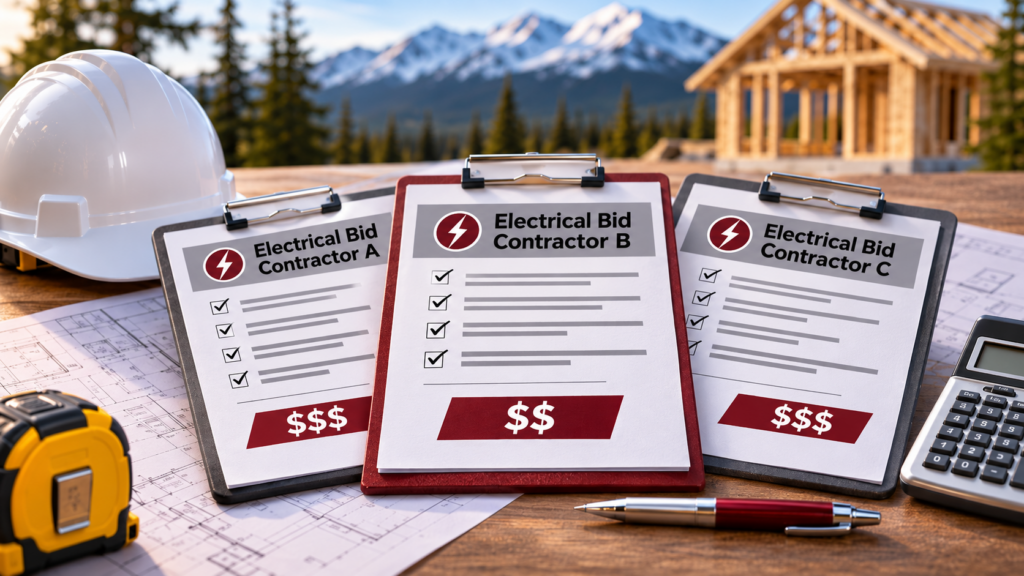
What Should You Look for When Comparing Electrical Bids?
Price matters. Building a home is expensive, and everyone wants to make their money go as far as possible.
But the lowest initial bid doesn’t always represent the lowest final cost.
When comparing contractors, take the time to look beyond the bottom line. Ask questions such as:
- What exactly is included? Are the lighting fixtures, outlets, switches, and other requested features accounted for?
- What assumptions were made? If your plans don’t include an electrical layout, ask the contractor what they used to determine the price.
- Does the bid meet applicable code requirements? Ask how the contractor will ensure the work meets the requirements for your project.
- How are changes handled? Find out how extras are priced and whether you’ll receive a written price before additional work begins.
- What is the quality of the proposed work? Discuss materials, workmanship, and the contractor’s approach to completing the job properly.
- How will you communicate? A good working relationship includes clear expectations, answers to your questions, and communication when plans or costs change.
A slightly higher bid may include features that another contractor left out. On the other hand, a lower bid may be a perfectly reasonable price for the same scope of work.
The key is to understand what you’re comparing before making your decision.
In my experience, taking the time to clarify the details upfront can help homeowners avoid difficult choices later—such as going without the features they wanted or paying more than they planned.

An Alternative to Traditional Competitive Bidding: Custom Bidding
At Kingdom Electric, I understand that the traditional bidding process doesn’t always give homeowners the clarity they need. That’s why I offer an alternative I call Custom Bidding.
Instead of simply pricing an electrical installation based on incomplete plans and assumptions, we start by talking about what you actually want for your home.
Here’s how it works.
Send me your house plans, and we’ll review them together—in person, over the phone, or by email. We’ll discuss your ideas, priorities, and budget, and I’ll help identify opportunities to improve the convenience and functionality of your electrical system.
We can work through details such as:
- Lighting placement and fixture locations
- Switch placement and lighting controls
- Outlet locations based on how you plan to use each room
- Kitchen, bathroom, and task lighting
- Television, fireplace, and entertainment areas
- Ceiling fans and other desired features
- Exterior lighting and other practical additions
We can also discuss where it makes sense to simplify the design or save money without compromising the quality and functionality of the installation.
Once we’ve worked through the details, I’ll prepare a bid based on the agreed-upon scope of work, so you have a clearer understanding of what’s included and what the project is expected to cost.
The goal is to help you make informed decisions before the work begins—not surprise you with a list of additions after the fact.
If traditional competitive bidding hasn’t been the right fit for you, or you simply want a more personalized approach, I’d be happy to talk with you about a custom bid.
Let’s Recap: Plan Ahead, Ask Questions, and Stay on Budget
Building a new home should be an exciting experience. Your electrical system plays a major role in how comfortable, convenient, and functional that home will be for years to come.
Here are the most important things to remember:
- Don’t choose a contractor based on price alone. Make sure you understand what each bid includes.
- Whenever possible, provide plans with a detailed electrical layout.
- Communicate your needs and priorities before the work begins.
- Ask for written pricing and approval before proceeding with additional work.
- Compare the scope of work, not just the final number.
- Choose a contractor who is willing to answer your questions and communicate clearly.
The goal isn’t necessarily to spend more money on electrical work. It’s to spend your money intentionally, get the features you actually want, and avoid preventable surprises along the way.
I’ve sat down with many customers to discuss their plans and help them figure out what they need, only to lose the project because my bid was higher than another contractor’s. Sometimes, the difference came down to what was included in each proposal.
That’s why I believe homeowners deserve to understand what they’re paying for before they make a decision.
At Kingdom Electric, I want you to feel confident about your electrical installation, know what to expect, and end up with a home that works for you and your family.
Ready to Plan the Electrical for Your New Home?
If you’re building a new home or planning a major remodel in the Sterling, Soldotna, or surrounding Kenai Peninsula area, I’d love to help you explore your options.
Reach out to Kingdom Electric LLC to discuss your plans and learn more about our Custom Bidding process. Let’s talk through what you want, identify the details that matter most, and work toward an electrical plan that fits your home and your budget.
Plan it right. Price it clearly. Build with confidence.